
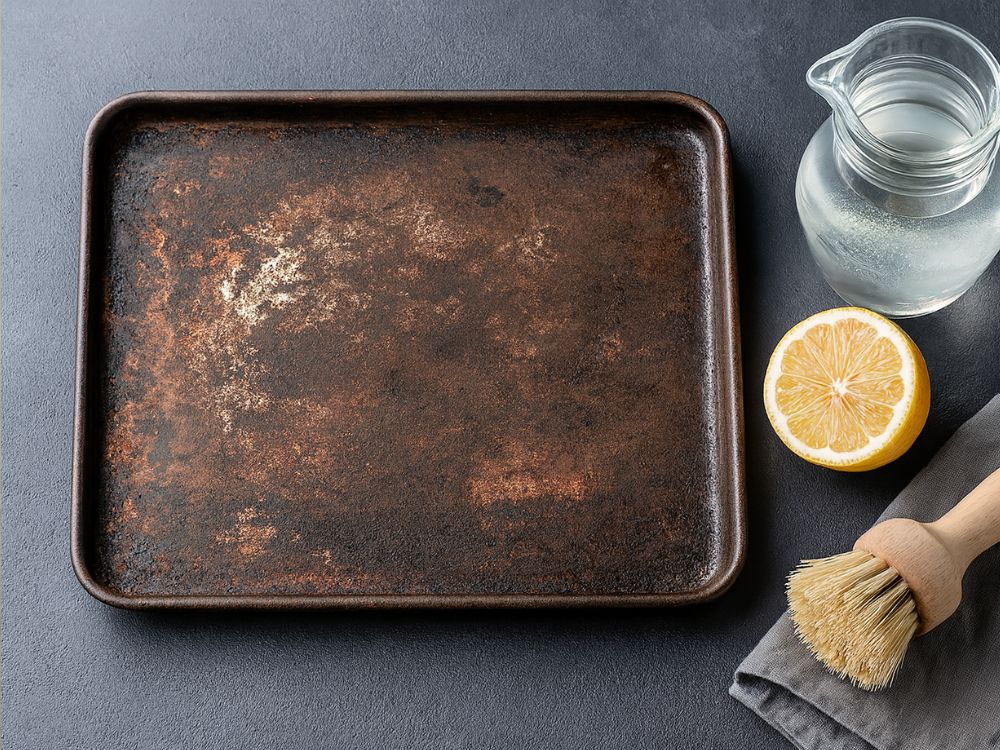
Rusty baking sheets are one of those kitchen frustrations that seem to sneak up when you least expect them. A little moisture, a small scratch, or an overnight soak in the sink is all it takes for oxidation to begin forming across the metal. While rusted garden tools might look charming in an outdoor setting, rust has no place on surfaces that come into contact with food. Fortunately, restoring your baking sheets doesn’t require harsh chemicals or expensive cleaning sprays. With a few pantry staples—especially vinegar and lemon juice—you can dissolve rust safely and effectively.
Before diving into the cleaning process, it helps to understand what’s happening. Rust forms when iron reacts with oxygen and water, creating iron oxide. Once that crusty, brown buildup settles onto a baking sheet, it compromises the smooth, even surface that’s crucial for proper heat distribution. Rust spots can create “hot zones,” which cause cookies to overbake in one area and undercook in another. Even more importantly, acidic foods can dissolve rust slightly, allowing trace metals to transfer into whatever you’re cooking. That’s why removing rust is more than cosmetic—it’s a matter of keeping your cookware functional and food-safe.

Why Vinegar and Lemon Juice Work So Well
Vinegar and lemon juice are two of the most effective natural rust removers because both contain acids strong enough to break down iron oxide. Vinegar contains acetic acid, while lemon juice provides citric acid. Alone, each is powerful, but together they create a more efficient rust-dissolving solution. This combination has long been used in household cleaning because it gently penetrates corrosion without damaging metal underneath.
Another benefit? Both ingredients are food-safe, non-toxic, inexpensive, and already in most kitchens—making them an ideal first step before considering stronger commercial products.
Two Effective Methods for Removing Rust Using Vinegar and Lemon Juice
There are two reliable ways to use these ingredients, depending on how severe the rust is and how much time you have.
1. Full Soak Method (Ideal for Heavy Rust)
What You’ll Need:
- White, apple cider, or cleaning vinegar
- Fresh lemon juice
- Hot water
- Kitchen brush or scrubber
- Baking soda (for neutralizing acids)
How to Do It:
- Mix a 1:1 solution of vinegar and lemon juice in a sink, deep tray, or dish tub. Ensure there’s enough liquid to fully submerge the baking sheet.
- Place the baking sheet into the mixture and let it soak.
- Light rust: 30–60 minutes
- Moderate rust: 2–4 hours
- Severe rust: Overnight
- After soaking, scrub the surface using a stiff kitchen brush. The rust should loosen easily after the acids have softened it.
- When the rust is gone, neutralize the acids by dipping the baking sheet into a mixture of warm water and a tablespoon of baking soda. This stops the chemical reaction from continuing on the metal.
- Rinse thoroughly with clean water.
- Dry completely—ideally with a clean cloth followed by air-drying. Even a few droplets of water left behind can restart oxidation.
2. Vinegar First, Lemon Second (Best for Thick, Stubborn Patches)
This method works well when rust forms in uneven plaques or layered patches.
Step-by-Step:
- Submerge the baking sheet in vinegar alone for 1–3 hours. Vinegar’s acetic acid breaks down the bulk of the oxidation.
- Remove the pan and scrub off as much rust as possible.
- Apply fresh lemon juice directly onto remaining spots, focusing on deeply embedded rust.
- Use a brush or a ball of aluminum foil to scrub the lemon juice into the rust. The added abrasion helps lift stubborn areas.
- Neutralize with baking soda water, rinse, and dry fully.
If you run out of lemon juice, bottled lime juice or citric acid powder dissolved in water works the same way.
Additional Natural Rust-Removal Methods to Expand Your Options
If your baking sheets are extra rusty—or if you simply prefer different ingredients—these alternatives can help:
Baking Soda Paste
Mix baking soda with hot water to create a thick paste. Spread it over rust spots and let it sit for 30–45 minutes, then scrub. Great for light rust and safe for aluminum.
Salt + Lemon Scrub
Sprinkle coarse salt over the rust and scrub with half a lemon. The salt acts as an abrasive while the lemon breaks down oxidation.
Hydrogen Peroxide + Baking Soda
Combine equal parts hydrogen peroxide and baking soda to create a bubbling paste that lifts rust from porous spots. Works well on older pans.
Cream of Tartar + Vinegar
This old-fashioned method creates a gentle, slightly foamy cleaner that’s especially effective on stainless steel.
Bar Keepers Friend
Still non-toxic but slightly stronger than pantry ingredients, this cleaner is highly effective on rust and discoloration. Be sure to rinse thoroughly afterward.
Before You Start: Know Your Baking Sheet Material
Aluminum Baking Sheets
Very prone to discoloration and mild surface rust-like oxidation
→ Use baking soda, lemon, or cream of tartar—avoid long vinegar soaks, which can dull aluminum.
Stainless Steel Baking Sheets
Can handle vinegar and lemon easily.
→ Soak or scrub freely.
Nonstick Baking Sheets
Be careful—harsh acids and scrubbing tools may damage the coating.
→ Stick to a gentle baking soda paste.
Preventing Rust From Coming Back
Restoring your baking sheets is one thing—keeping them rust-free long-term is another.
Here’s how to extend their life:
1. Always Dry Immediately
Even a thin layer of moisture left on the surface can trigger oxidation overnight.
2. Avoid the Dishwasher
Dishwasher detergents are harsh on metal and break down protective coatings.
3. Line Your Pans
Using parchment paper or silicone mats reduces direct contact and protects the surface.
4. Don’t Soak Overnight
Long soaking can damage metal and increase rust formation.
5. Store Properly
Avoid stacking damp pans. Sliding pans in and out of cabinets while still wet creates perfect rust conditions.
When It’s Time to Replace Your Baking Sheet
Most rust is repairable, but if the metal is pitted, flaking, or thinning, it may not be safe anymore. Deep rust can compromise the integrity of the pan and lead to uneven cooking or metallic transfer to food.
If the surface feels rough even after cleaning, or if the rust returns within days, replacement is the safer choice.
A rusty baking sheet doesn’t automatically mean it’s ready for the trash. With the right combination of vinegar, lemon juice, and a bit of patience, you can restore most metal sheet pans to a smooth, food-safe shine. Even better, these natural methods keep your kitchen free of harsh chemicals and give your cookware a second life. Once cleaned, a few simple habits—like drying immediately and avoiding long soaks—will keep your baking sheets looking new for years.