
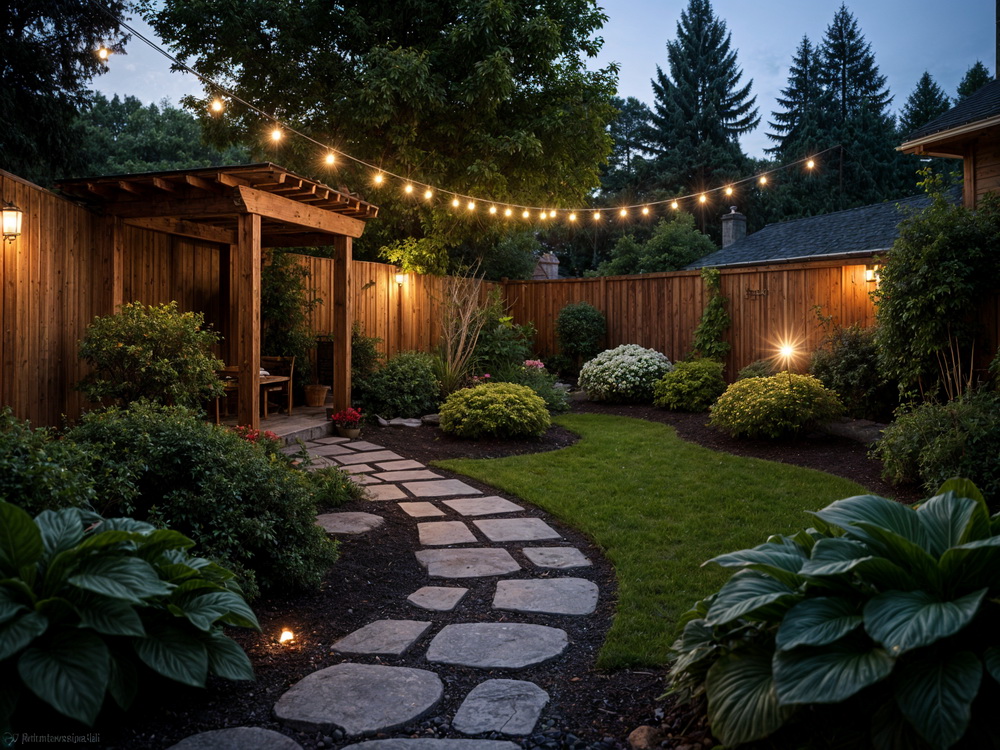
After a demanding day at work, there’s something uniquely soothing about entering a garden tailored for nighttime enjoyment. Designing an outdoor area that welcomes you home and encourages lingering well after dusk requires careful attention to lighting, fragrance, and practical use. Over the years, I’ve assisted clients in turning standard backyards into tranquil evening escapes—places to unwind, host friends, and reconnect with nature as the sky darkens.
The Allure of Dusk: Harnessing Evening Light in the Garden
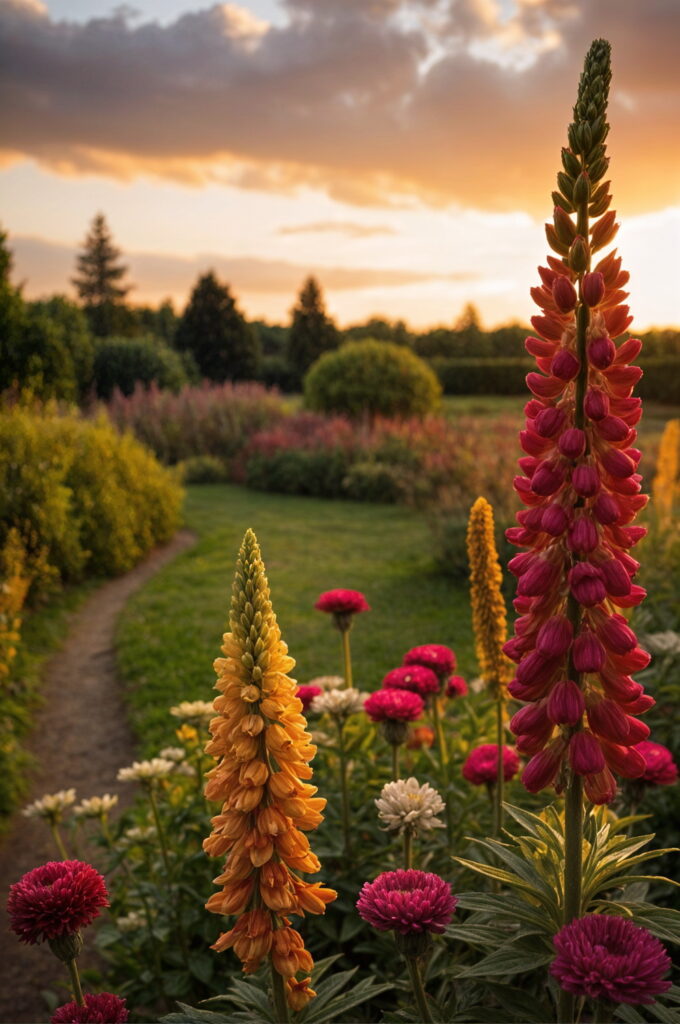
As the sun sets, gardens undergo a remarkable shift. The early evening brings a warm, golden hue that accentuates foliage and flowers, while later, only the palest shades remain visible. This natural progression of light offers unique opportunities for intentional design.
As one landscape expert observed, lighting alters everything. The setting sun can illuminate fine grasses from behind, making them almost ethereal. As darkness settles, plants with white or variegated leaves become focal points, standing out long after other colors fade.
When planning gardens for evening use, it’s vital to observe how each section receives light from sunset into night. This insight allows you to position plants and features for maximum visual impact and enjoyment after dark.
Evening Gardens as Spaces for Transition
Gardens designed for the evening act as buffers between the demands of work and the comforts of home—a place to decompress. Professionals suggest imagining your evening routine as a chance to reconnect with the outdoors. With the right plant choices, thoughtful layout, and inviting seating, your backyard can become a restorative sanctuary.
Think of your after-work garden as a personal retreat, marking the end of the day and celebrating your connection with nature. Just as you’d plan a festive event with specific decor, select plants and accents that contribute to this nightly ritual.
Key Components of a Successful Evening Garden
Choosing Plants That Glow After Dark
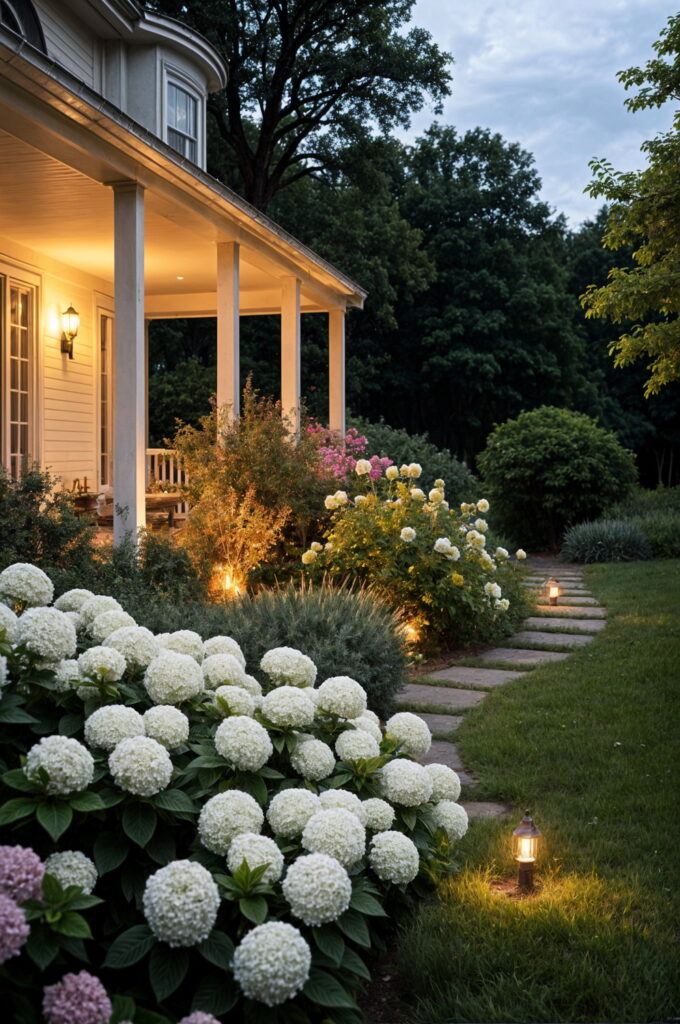
The most inviting nighttime gardens feature plants that maintain their charm as daylight fades. Consider the following:
Pale Flowers and Foliage
“White is the color most easily seen as the evening progresses, so place variegated or white-flowering plants where they’ll catch the last light.” In expansive gardens, larger blooms are more noticeable than small ones when viewed from a distance at dusk.
Excellent options include:
- Clematis ‘Maria Cornelia’ – soft blooms that seem to float in the dark
- Gaura lindheimeri ‘The Bride’ – airy clusters of white flowers
- Hosta ‘El Niño Green’ – pale, luminous leaves
- Artemisia ‘Powis Castle’ – silvery foliage that reflects moonlight
- Petunia ‘Surfinia Lime’ – light blossoms visible in dim conditions
Fragrant Plants for the Evening
Many flowers release their richest scents at dusk to attract nighttime pollinators. Planting these along walkways or near seating areas adds an extra sensory layer. Their aroma is especially powerful in smaller gardens or when several varieties are grouped together.
I recommend placing these fragrant selections near where you’ll sit to maximize their effect. Choose spots with plenty of daytime sun, as warmth helps release their scent as night falls.
Recommended Night-Scented Plants:
| Plant | Fragrance | Ideal Placement |
|---|---|---|
| Honeysuckle | Sweet, heady | Climbing walls, pergolas |
| Night phlox | Spicy vanilla | Borders, pots |
| Jasmine | Richly sweet | By windows, patios |
| Nicotiana | Sweet, tobacco-like | Beds, containers |
| Evening primrose | Delicate, citrusy | Ground covers, borders |
| Moonflower | Exotic vanilla | Trellises, vertical spaces |
Plants with Extended Interest
In compact gardens where every inch matters, it’s best to steer clear of plants that only look good for a short time. Instead, prioritize those with long-lasting blooms. Consider choices such as repeat-blooming roses, Erigeron karvinskianus, Erysimum ‘Bowles’s Mauve’, and resilient geraniums, all of which deliver months of color and interest.
Lighting Your Nighttime Haven
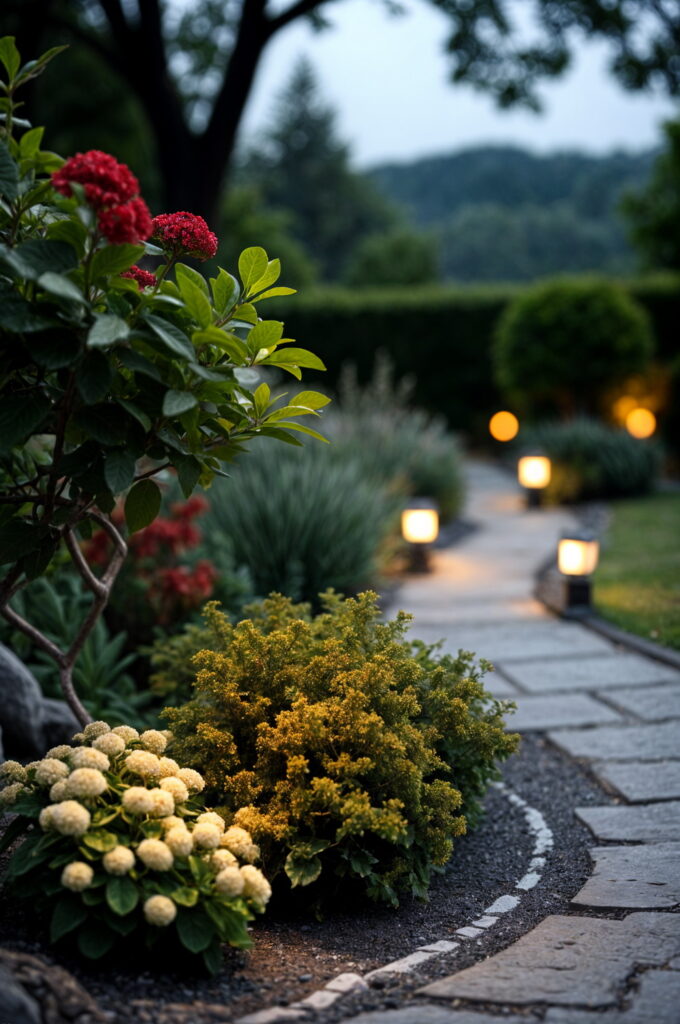
Thoughtfully placed lighting can elevate a simple garden into an enchanting space to enjoy after dark. In one of my projects, we used soft, ambient lights to gently highlight each area—whether for socializing, dining, gathering around the firepit, or relaxing in the hot tub—making the garden inviting and functional well into the night.
Lighting Styles for Night Gardens
Various lighting techniques can produce distinct atmospheres in the garden:
- Uplighting: Placing lights at ground level to cast beams upward, drawing attention to trees or architectural elements
- Pathway lighting: Installing low-level lights along walkways to ensure safe navigation after dark
- Moonlighting: Mounting fixtures high up in trees to replicate the gentle glow of moonlight through the branches
- Accent lighting: Focusing light on standout features such as fountains, sculptures, or other focal points
Low-profile lights nestled among shrubs can beautifully showcase plantings and create intriguing shadows along the borders. Using uplighting allows soft, scattered illumination to pass through leaves, resulting in eye-catching patterns that enhance the interplay of greenery with the natural colors of wood and stone.
Eco-Friendly Lighting Options
For those mindful of sustainability, consider:
- Solar lights – Use sunlight to power evening illumination
- LED fixtures – Energy-saving and durable
- Smart systems – Control lighting remotely to minimize waste
- DIY lanterns – Tin cans or glass jars make charming, low-cost lights
Designing for Evening Functionality
Spaces for Every Purpose
A well-designed evening garden usually includes zones for various activities:
- Relaxation areas with cozy seating to enjoy sunsets
- Entertainment spots for socializing with guests
- Dining zones with enough light for preparing and eating meals
- Pathways that safely guide you through the garden after dark
One client summed up their wishes: “Above all, I wanted a garden that was practical, felt and looked larger than it is, and made every inch count.”
Water Features for Nighttime Atmosphere
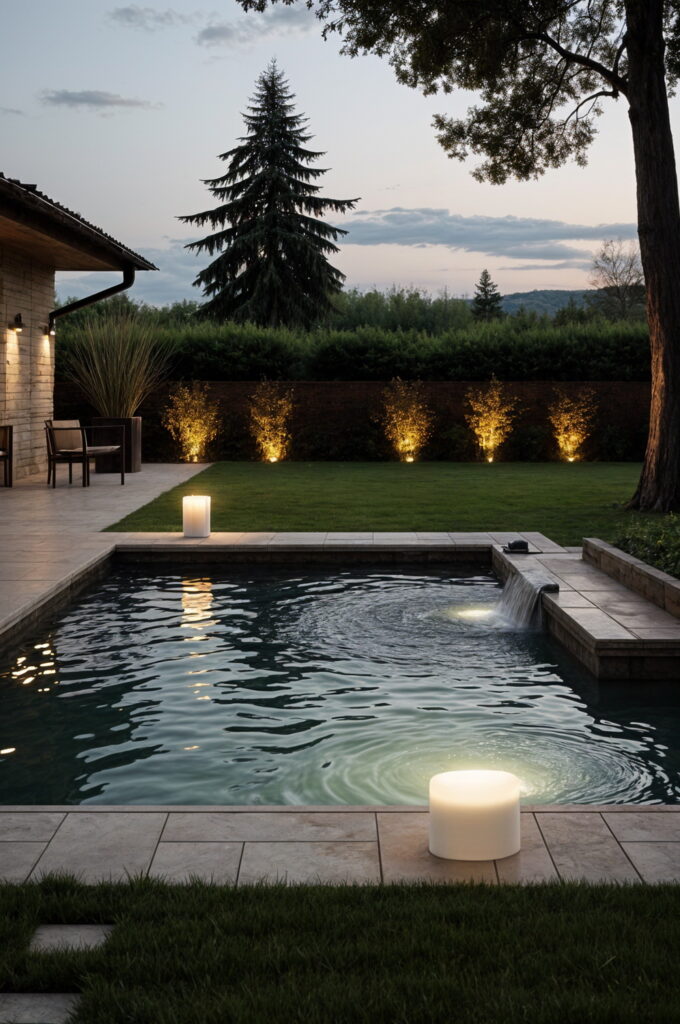
Water features bring a variety of benefits to nighttime gardens:
- Noise reduction: In one project, a water element was specifically added to help muffle the sound of nearby highway traffic.
- Reflective surfaces: Water can mirror and enhance the effects of garden lighting, adding extra sparkle after dark.
- Cooling effect: These features help create a more pleasant, cooler environment on hot evenings.
- Visual movement: Flowing water introduces lively motion to spaces that might otherwise feel static at night.
For a particularly memorable installation, we selected a water feature made from basalt columns, chosen for its organic look that complemented the home and surrounding landscape. With well-placed lighting, the fountain became a captivating focal point, visible from several rooms well into the night.
Inviting Seating for Long Evenings
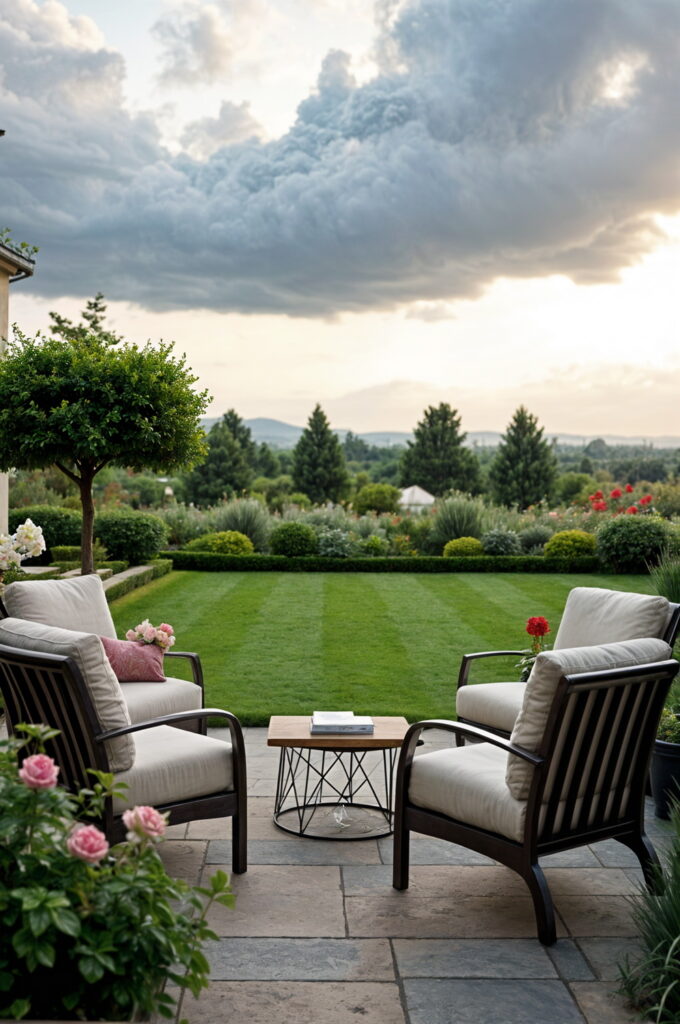
Seating arrangements should encourage you to relax and linger as daylight fades into night.
- Place chairs and benches to make the most of sunset vistas, allowing you to soak in the changing colors of the sky.
- Choose adaptable furniture—such as pieces with removable cushions or convertible features—to stay comfortable as temperatures shift in the evening.
- Add side tables nearby for holding drinks and snacks, making the space more functional and inviting.
- Situate seating close to fragrant, night-blooming plants to enhance the sensory experience as you unwind outdoors.
Picture a secluded front yard retreat just beyond your doorstep, offering a refreshing escape from the bustle of the street. You can achieve this welcoming atmosphere with vibrant apple-green Adirondack chairs, matching decorative pillows, a bold teal planter, and plants with chartreuse foliage that stand out beautifully in the evening light.
Real-Life Evening Garden Transformations
From Disjointed to Harmonious
A client once came to me describing their garden as disjointed and lacking unity, which made it difficult to fully enjoy the space in the evenings due to its fragmented layout.
Reflecting on the transformation, the client noted, “You took my patchwork garden and unified it by introducing a diverse mix of plants with unique foliage shapes, textures, and colors. By adding stone walkways and walls, art installations, and a deck with integrated planters, you created a landscape that is both harmonious and visually engaging.”
Key aspects of the redesign included:
- Removing plants that didn’t fit the new cohesive vision
- Introducing a variety of textures and forms that stand out even in low light
- Building a deck designed to serve as an outdoor living space
- Replacing traditional railings with planters to seamlessly connect different garden elements
The client shared that the new deck now feels like an extension of their great room, transforming what was once a dark, enclosed area into a space that is much brighter and more open.
Realizing a Long-Held Dream
Perhaps my most heartfelt project was helping a client fulfill his late wife’s dream of a backyard retreat. “This backyard transformation began as a long-held wish of my client’s wife, who dreamed for decades of turning their outdoor space into a peaceful haven. After her passing, he felt compelled to finally realize her 30-year dream as a tribute to her memory.”
The site presented several obstacles:
- Severe drainage and erosion problems
- Unsafe, deteriorating timber retaining walls
- Lack of secure pathways to access lower parts of the garden
- Persistent noise from a nearby freeway
To address these, we implemented:
- Terracing the slope with fieldstone walls to manage erosion
- Installing Lannon stone steps for safe movement between levels
- Adding a basalt column fountain to help muffle traffic sounds
- Incorporating landscape lighting to make the garden inviting after sunset
- Placing a hammock in an ideal spot for relaxation
As the client described, “We included a hammock so I could unwind with a book or take a nap, perfectly positioned to take in the entire yard and the soothing sound of water flowing from the central fountain”.
Making the Most of Awkward Spaces
A particularly complex project required transforming a back garden made uneven by the presence of a garage and driveway, resulting in a challenging L-shaped configuration. Initially, the space lacked sufficient areas for seating or entertaining; while the plantings were visually appealing, the overall design failed to draw people outdoors or invite exploration.
Key Challenges Addressed:
- Persistent drainage issues left the lawn soggy and unusable during the winter months.
- The soil had become acidic and compacted due to construction activities, negatively impacting plant health.
- Harsh sunlight poured through the living room windows, causing discomfort inside the home.
- Several narrow sections of the garden remained underutilized and failed to serve any functional purpose.
The Design Solution:
To overcome these obstacles, the primary focus was on enhancing the connection between the house and the garden, understanding that a seamless indoor-outdoor transition is essential for encouraging regular use of outdoor spaces. The redesign involved replacing a slim planting border—which had previously separated the patio from the main garden—with a much larger patio area suitable for outdoor dining and gatherings. This new layout unified the space, making it more welcoming and practical, and ultimately encouraged greater enjoyment of the garden as a whole.
Practical Steps for Your Own Evening Garden
Assessing Your Yard’s Nighttime Potential
Before launching into your evening garden redesign, take time to thoroughly evaluate the following aspects of your outdoor space:
- Light Patterns: Observe which parts of your yard receive the last light of the day, as these areas can become natural focal points in the evening.
- Existing Views: Decide what features or vistas you want to emphasize and which ones you might prefer to hide or soften with plantings or structures.
- Functional Needs: Reflect on how you plan to use the garden after work—whether for relaxation, dining, entertaining, or other activities—to ensure the design supports your lifestyle.
- Privacy Considerations: Assess what portions of your yard are visible to neighbors under evening lighting, and consider how to enhance privacy if needed.
It’s also crucial to analyze the light conditions throughout your yard. Identify whether each area receives full sun, partial sunlight, or is shaded by trees or buildings. This understanding will guide your plant choices and help you decide how to use each section most effectively, ensuring that your garden thrives and meets your needs in the evening hours.
Affordable Ways to Enhance Your Night Garden
You don’t need a complete overhaul to create a magical evening space:
- Use targeted lighting to refresh existing areas
- Add containers with night-friendly plants
- Incorporate homemade lanterns or solar string lights
- Update furniture with light-colored cushions for visibility
Designing for All-Season Enjoyment
A well-planned evening garden should offer beauty and relaxation in every season, not just during the warmer months.
- Spring: Incorporate early-blooming plants to bring color and interest as the days begin to lengthen, setting the stage for evening enjoyment.
- Summer: Take advantage of the longest days of the year, when your garden becomes a prime spot for evening gatherings and outdoor relaxation.
- Autumn: Select late-flowering varieties and plants with vibrant fall foliage to keep the garden lively and visually appealing as temperatures cool.
- Winter: Use structural elements such as ornamental grasses, evergreens, and thoughtfully placed lighting to highlight shapes and textures, ensuring your garden remains attractive even in the colder months.
For the greatest effect—especially in compact spaces—opt for smaller trees that provide visual interest throughout the year. A great example is Amelanchier lamarkii, which delights with delicate blossoms in spring, produces dark berries in summer, and displays striking autumn foliage, making it a valuable addition for multi-season appeal.
Engaging All the Senses in Your Night Garden
Although visual appeal is often the focus of garden design, truly memorable evening gardens are those that stimulate all the senses, creating a richer and more immersive experience.
Scent: Adding plants with evening fragrance is essential for nighttime gardens. Many species release their scent as the sun sets, frequently to attract nocturnal pollinators like moths, and these aromas are often at their strongest in warm, calm conditions.
Sound: The gentle sound of moving water from fountains or ponds can bring a sense of tranquility to your garden after dark. Ornamental grasses add another layer, their leaves and seed heads softly rustling in the evening breeze.
Touch: Incorporate a variety of tactile materials to be enjoyed even when visibility is low. Smooth pebbles, velvety foliage, and rugged bark all add a sensory dimension that invites touch as you move through the space.
Taste: Remember to include edible plants, especially herbs, which not only infuse your night garden with delightful scents but also provide fresh flavors for summer entertaining. Growing herbs like mint, basil, or thyme means you can easily add homegrown ingredients to your evening drinks and meals.
One garden designer described their philosophy as crafting a carefully orchestrated, vibrant environment that stimulates every sense—refreshing both mind and spirit. An evening garden designed this way becomes a space where you can both lose yourself in relaxation and rediscover a sense of peace.
Sources:
Garden Design Inspiration and Ideas
https://www.gardendesign.com/ideas/
Nighttime Garden Design and Lighting
https://ngb.org/night-garden/
Sensory Garden Design
https://urban-earth.co.uk/sensory-garden-design/
Garden Lighting Techniques and Solutions
https://www.hampshirelight.net/blog/ultimate-guide-to-garden-lighting-design
Water Features in Garden Design
https://www.gardendesign.com/ideas/water-features.html
Fragrant and Night-Scented Plants
https://hub.suttons.co.uk/gardening-advice/five-best-night-scented-plants
Seasonal Garden Planning
https://www.gardendesign.com/landscape-design/
