
Key Points
A simple baking soda, water, and dish soap paste safely lifts baked-on grease without damaging tempered glass.
Letting the mixture sit and scrubbing gently with non-abrasive tools removes even stubborn buildup.
A light vinegar rinse and microfiber polish leave the oven door streak-free and crystal clear.
Keeping the inside of your oven clean is one thing—tackling the glass door is another story entirely. Between splattered oils, baked-on sauces, and high temperatures that essentially “cook” grime into the surface, that glass panel becomes cloudy surprisingly fast. Standard window sprays barely make a difference, and harsh oven cleaners contain chemicals that can damage the tempered glass if used incorrectly.
Fortunately, there’s an easy, low-cost method that cuts through layers of buildup without exposing your appliance to anything abrasive or potentially harmful. The best part? You probably already have everything you need in your kitchen cabinet.

Why This Homemade Paste Works So Well
Baking soda is one of the most effective natural cleaning agents for this job because it offers just enough grit to loosen debris without scratching the glass. It’s also alkaline, which helps break down acidic food stains and lingering odors.
Start with about ½ cup of baking soda, then stir in ½ cup of warm water and a small squeeze of dish soap. Dish soap contains surfactants that lift away oils and stubborn grease, making this simple mixture surprisingly powerful. Mix until you get a loose, spreadable paste.
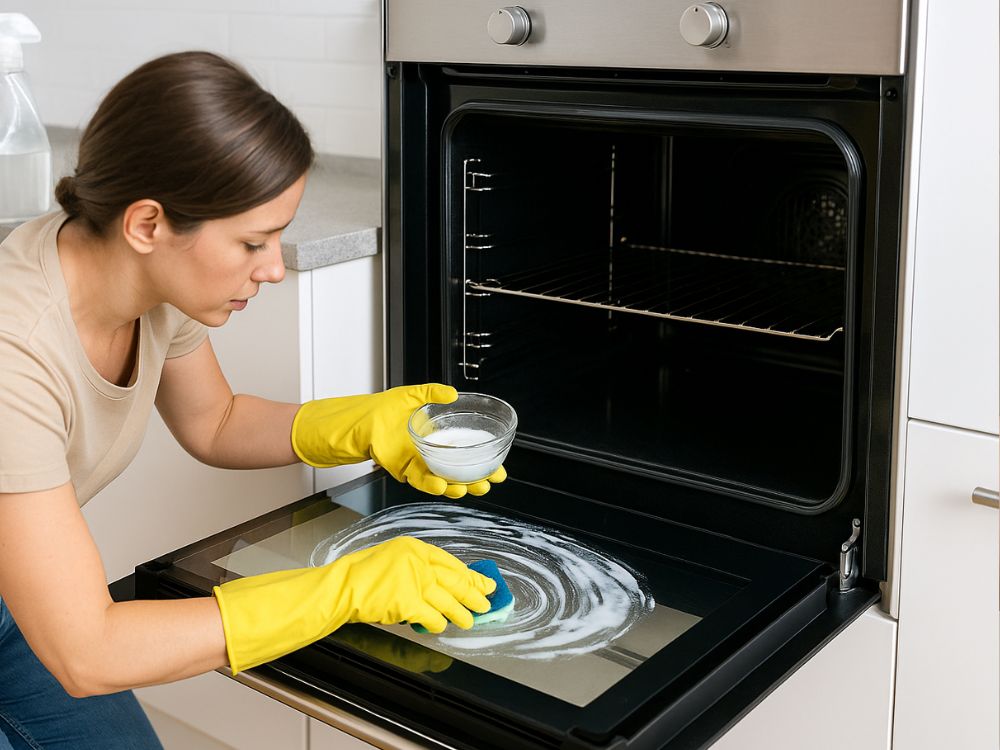
Apply a generous, even layer across the entire glass door—inside only—then let it sit for 15 to 30 minutes. During this time, the grime softens and lifts away from the surface, making the next step much easier.
Scrub Strategically for Best Results
After the paste has done its work, wet a soft sponge with hot water. A sponge with a gentle abrasive side is ideal; avoid steel wool or anything extremely coarse, since those can scratch the tempered glass.
Use slow, circular motions to work the paste into the buildup. Depending on how long it has been since your last deep clean, this may take 10 to 20 minutes of steady scrubbing.
For tight corners and the edges around the gasket, a simple toothbrush can make a huge difference. The bristles reach small crevices where grime likes to hide, helping you achieve a consistent clean across the entire door.
Add a Vinegar Rinse for a Streak-Free Finish
If certain greasy spots still refuse to lift, a diluted vinegar rinse provides the perfect finishing touch. Mix:
- 1 part distilled white vinegar
- 4 parts water
Dip your sponge in the solution, then gently wipe the glass again. The mild acidity reacts with any remaining baking soda, dissolving stubborn residue and preventing streaks.
When the glass looks clean, remove the leftover paste with paper towels. Finish with a dry microfiber cloth to polish the glass until it’s flawlessly clear.
Once you see that sparkle, you’ll be motivated to keep up with quick, regular cleanings—because a clean oven door makes the whole kitchen feel fresher.
Frequently Asked Questions
How often should I clean my glass oven door?
About once a month is ideal. If you use your oven frequently or cook oil-heavy foods, a bi-weekly wipe down will prevent heavy buildup.
Can I use this paste on the oven’s interior as well?
Yes, the mixture is safe for most oven interiors, but avoid applying it directly onto heating elements. It’s especially useful for areas with baked-on stains.
Is vinegar safe for tempered glass?
Absolutely. Diluted white vinegar is gentle and effective, especially when removing residue left behind from baking soda or soap.
What if my oven door has double-paned glass and dirt inside?
This method only cleans the outer surface. For dirt trapped between the glass panels, you’ll need to remove the door (most models allow it) and separate the panes—or hire a technician.
Can I replace vinegar with lemon juice?
Yes, lemon juice has a similar acidic profile, though vinegar tends to break down grease faster.