
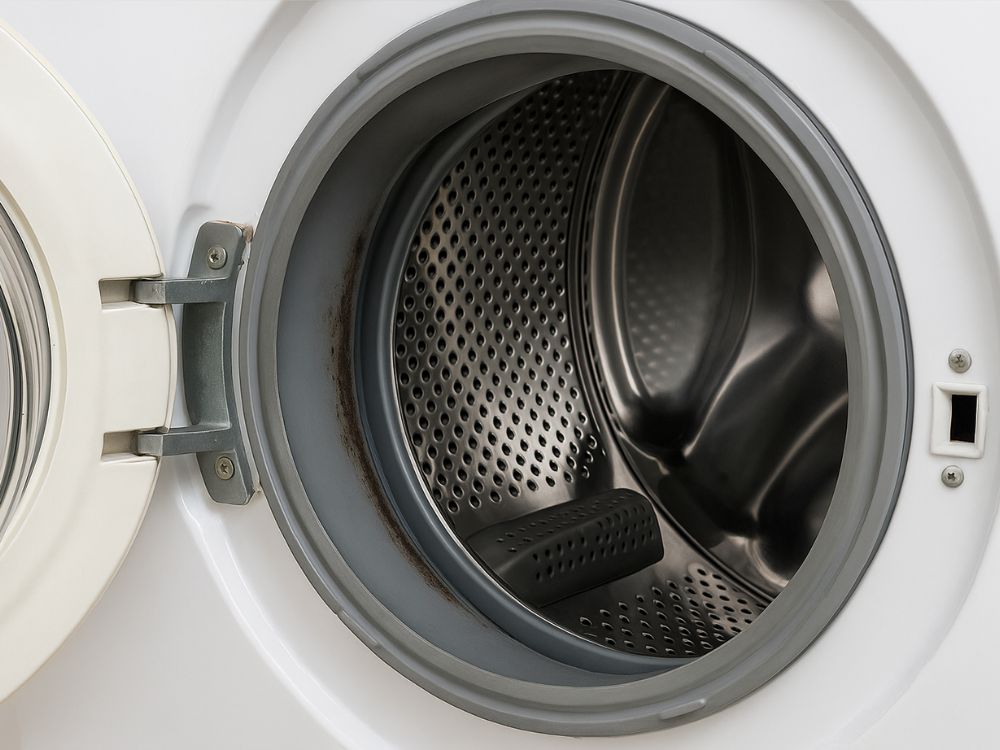
A sour, musty smell coming from your washing machine is more than just unpleasant—it’s a clear signal that mold is growing somewhere inside the appliance. Washers create the perfect environment for mold and mildew to thrive: warm temperatures, lingering humidity, and spaces like gaskets and seals where moisture gets trapped. If left untreated, that buildup can transfer odors onto clean laundry and make the whole laundry room smell stale.
The good news? You don’t need harsh chemicals or expensive cleaner tabs to fix it. A focused deep clean and a few simple maintenance habits are enough to remove the odor at its source and keep your washing machine fresh long-term.
Below, you’ll find a complete step-by-step guide to remove mold, clean the drum and gaskets, and prevent those unwanted smells from coming back.

The Most Effective Way to Remove Mold and Odors From Your Washing Machine
A monthly deep clean is the easiest way to stay ahead of mold growth. Here’s how to do it safely and effectively.
1. Protect your hands and grab an old cleaning towel
Put on gloves and use a towel you don’t mind staining. Mold removal can get messy.
2. Mix your cleaning solution
Use either:
- Hot water + bleach
or - Hot water + white vinegar
(Important: Never mix bleach with vinegar. Combined, they create dangerous chlorine gas.)
3. Scrub every visible spot of mold
Dip your towel into the solution and scrub inside the drum, the detergent drawer, and especially around the rubber seals where moisture hides.
4. Clean the door gasket thoroughly
If you have a front-load washer, gently pull back the folds of the rubber gasket and wipe inside each crease. This area is the most common spot for mold to develop, so take your time and dry it well afterward.
5. Run a hot cleaning cycle
Set your washer to its hottest wash cycle and add:
- 1 cup of bleach (into the bleach compartment), or
- 1 cup of vinegar (into the detergent dispenser)
If your washer has a “self-clean” or “tub clean” setting, use that option. This step kills hidden bacteria and flushes out residue you can’t reach.
6. Wipe away all moisture
Use a clean towel to dry:
- The drum
- The seals
- The dispenser drawer
- Any damp surfaces inside the machine
Moisture left behind becomes mold’s favorite place to grow.
7. Leave the door open
Allow the washer to fully air-dry. Proper ventilation makes a big difference in preventing the smell from returning.
Simple Habits to Prevent Mold From Coming Back
Keeping your machine dry and clean between washes is the key to avoiding musty odors.
Keep the door open when the washer is not in use
Closing the lid or door traps humidity inside, turning the washer into a dark, moist environment where mold thrives. Allowing air to circulate is one of the easiest ways to keep the interior fresh.
Remove wet laundry immediately
Leaving damp clothes inside—even for a short time—creates moisture buildup that spreads odor through the drum and gaskets. Try to start loads only when you know you’ll be home to move them to the dryer right away.
Dry the seals and dispenser after each wash
Use a dedicated old towel to wipe:
- The drum
- The rubber gasket
- The door
- The detergent drawer
High-efficiency front-load washers especially benefit from this habit because their gaskets hold moisture more easily.
Also, clear out anything trapped inside (pet hair, paper, lint) since debris can trap water and encourage mold growth.
Use the right laundry detergent
Liquid detergent often leaves behind residue that becomes food for mold. To avoid this:
- Choose HE-labeled detergent if you have a high-efficiency washer
- Prefer powder detergent or pods when possible
- Use only the amount recommended—too much product leaves buildup and lingering odor
Frequently Asked Questions
Which cleaning solutions are safe to use?
You can safely clean your machine with hot water + bleach or hot water + vinegar—just never combine them. Mixing bleach and vinegar creates toxic fumes. Use only one option at a time.
What should I do after regular laundry loads to prevent mold?
Dry out the interior, wipe down damp areas, and leave the door open. Mold thrives in warm, closed, moist conditions, so the goal is to remove as much moisture as possible after each wash.