
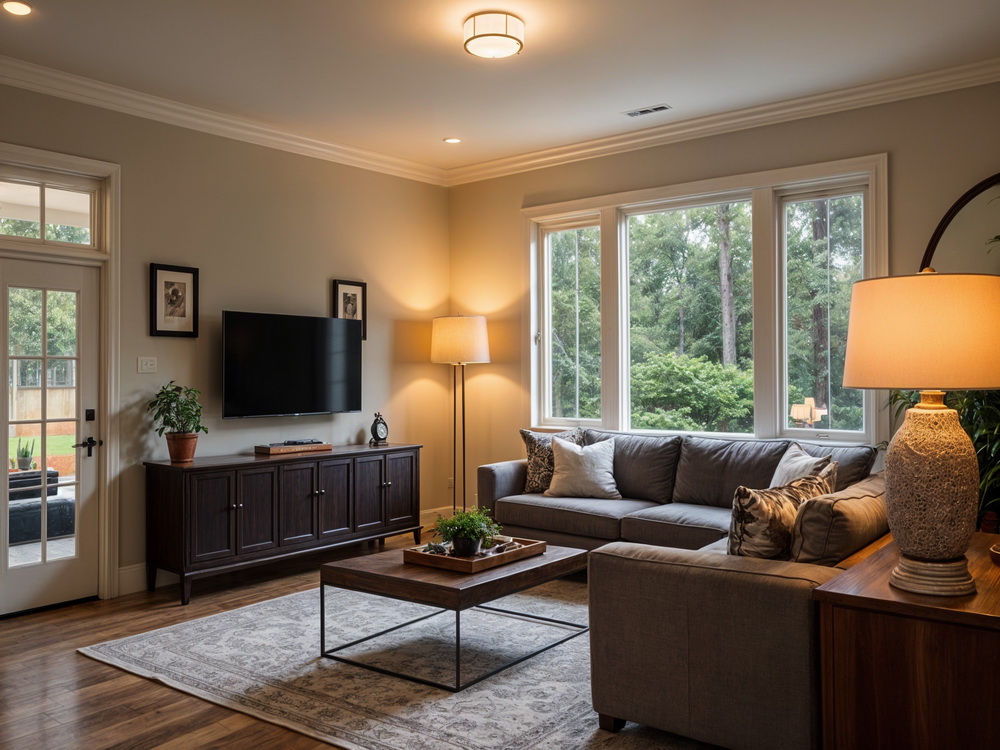
Illumination shapes the ambiance of interiors more significantly than nearly any other design element. Crafting an ideal lighting strategy requires a blend of technical accuracy and creative insight, resulting in spaces that are both practical and emotionally engaging. This comprehensive guide explores the fundamental aspects of lighting design—from grasping core concepts to sidestepping frequent errors—equipping you with the knowledge to enhance every room in your residence.
Understanding the Core Principles of Light

Before you begin planning, it’s essential to recognize that light is more than just brightness; it’s a multifaceted design tool with several adjustable properties and distinct purposes.
Four Fundamental Lighting Qualities
When planning your lighting design, pay attention to these four key attributes, which you can adjust to create the atmosphere and functionality you want:
- Hue: The color of light, now easily manipulated with modern technology, can dramatically affect atmosphere and perception.
- Brightness: The level of illumination, ranging from gentle to intense, should be tailored to a space’s function and desired mood.
- Direction: Where the light originates—above, below, or from the side—shapes how objects and spaces are experienced, influencing shadows and highlights.
- Dynamics: Changes in intensity, color, or direction over time are especially important in rooms serving multiple purposes.
Primary Roles of Lighting in Interior Design
Well-designed lighting serves four essential purposes:
- Visibility: Ensures essential clarity for daily tasks.
- Depth Creation: Strategic placement of light and shadow adds dimension and interest.
- Focused Attention: Contrasts in brightness guide the eye to key areas.
- Atmosphere: This is often the most nuanced yet powerful role of lighting, shaping the emotional feel of a room through thoughtful combinations of adjustable lighting characteristics.
The Impact of Color Temperature
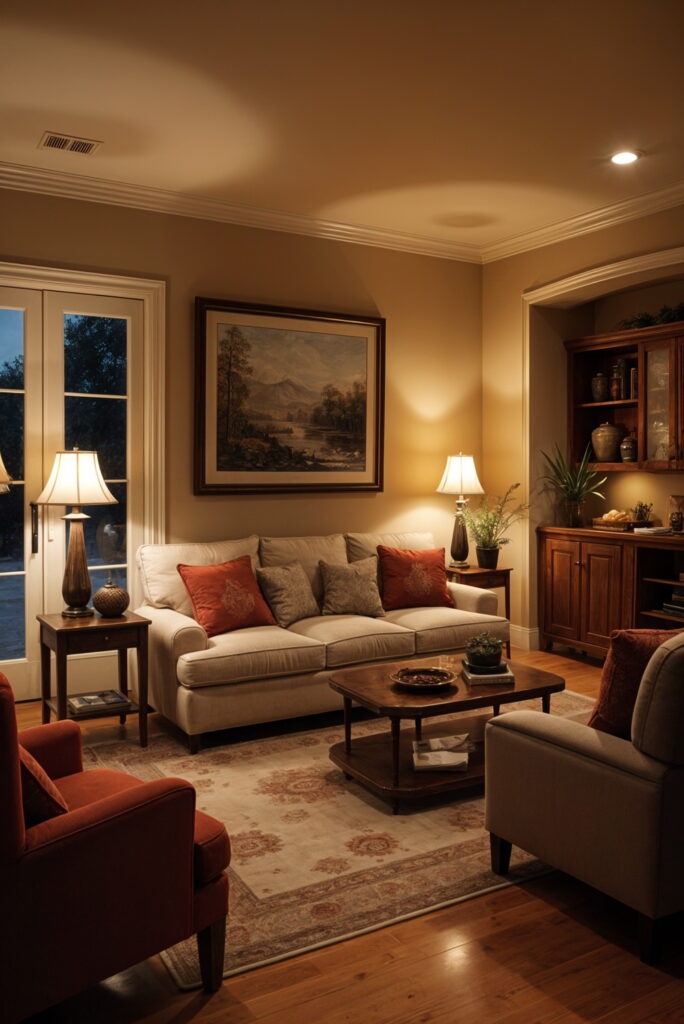
Light temperature, measured in Kelvin (K), ranges from warm (2000K–3000K) to cool (5000K–6500K), shaping how we perceive spaces:
| Temperature Range | Description | Ideal Applications |
|---|---|---|
| 2000K–3000K | Warm white/yellow | Living rooms, bedrooms, relaxation zones |
| 3100K–4500K | Neutral white | Kitchens, workspaces, bathrooms |
| 4600K–6500K | Cool white/blue | Task areas, art displays, garages |
Selecting the appropriate color temperature should reflect both the room’s purpose and the mood you want to establish. Warmer tones promote a sense of comfort and relaxation, while cooler hues are better suited for tasks that require concentration and clarity.
Crafting a Strategic Lighting Plan
A structured lighting plan is essential for achieving both practical functionality and visual appeal. Through extensive experience with home projects, I’ve developed a straightforward, step-by-step method that reliably produces outstanding results.
Step 1: Map Out a Precise Floor Plan
Start by drafting a comprehensive floor plan of your home, noting:
- The size and shape of each room
- Locations of windows and doors
- Built-in fixtures
- Where furniture is or will be arranged
- Specific zones for different activities within every space
This plan serves as the foundation for your lighting design. Clearly indicate spots where particular tasks occur—such as reading, cooking, or entertaining—since these areas will need tailored lighting solutions.
Step 2: Identify Activity Areas
For each area of your home, pinpoint the main and supporting activities:
- Kitchen: Meal preparation, cooking, dining, and gathering with others
- Living Room: Unwinding, reading, hosting guests, and conversation
- Bedroom: Sleeping, reading, and getting dressed
- Home Office: Working on the computer, reading, and participating in virtual meetings
- Bathroom: Personal care routines and relaxation
Each of these functions calls for its own lighting approach, ensuring that every activity is properly supported while maintaining a unified look throughout your home
Step 3: Match Lighting Types to Each Zone
Once you’ve identified the activities in each space, select the appropriate types of lighting to support them:
- General Lighting: This is the main source of light that ensures the entire area is evenly illuminated.
- Task Lighting: Provides concentrated light for activities such as reading, meal prep, or desk work.
- Accent Lighting: Used to draw attention to architectural elements, artwork, or specific decor pieces.
- Statement Lighting: Fixtures chosen for their decorative impact, serving as design highlights as well as light sources.
- Daylight Integration: Thoughtfully bringing in natural sunlight to complement your artificial lighting setup.
This layered approach helps create both functional and visually cohesive environments throughout your home.
Step 4: Plan Lighting Placement
Indicate on your floor plan the exact placement of each light fixture, taking into account:
- The location of current electrical outlets and wiring
- Ceiling height and any architectural features
- Where furniture is or will be arranged
- How people move through the space
- Where shadows may fall
- Ways to minimize glare
To achieve balanced illumination, use the 5-3-1 guideline:
- 5: Task lights (brightest) targeted for specific activities
- 3: Ambient lights (moderate brightness) to establish the overall mood
- 1: General lighting (softest) for basic visibility throughout the area
This structured approach ensures every zone is both functional and visually harmonious
Step 5: Choose Fixtures and Light Sources
Select lighting fixtures that satisfy both your practical requirements and your style preferences:
- Downlights: Ideal for providing general illumination and spotlighting areas without disrupting the visual flow of the ceiling.
- Flush or Semi-Flush Mount Fixtures: Suitable when recessed lighting isn’t feasible or when you want to introduce a decorative element overhead.
- Wall-Mounted Lamps: Great for hallways or as supplementary lighting in spacious rooms.
- Hanging Pendants: Eye-catching options that deliver targeted light above dining tables, kitchen islands, or seating zones.
- Portable Floor and Table Lamps: Versatile solutions that can be moved and adjusted as your needs evolve.
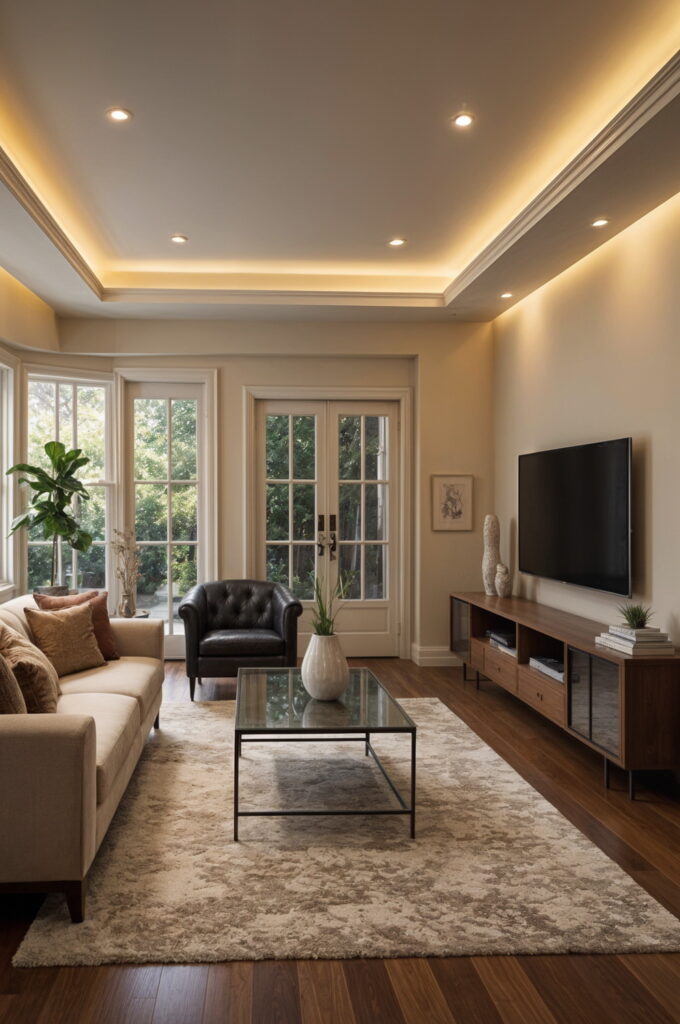
- LED Tape Lighting: Excellent for creating indirect light effects, illuminating under cabinets, or accentuating architectural details.
This approach ensures your lighting plan is both functional and visually cohesive.
Technical Considerations for Modern Lighting
Lighting technology has advanced rapidly in recent years, making it crucial to understand these innovations to create a lighting scheme that is not only visually appealing but also energy-efficient and adaptable for the future.
LED Selection
When choosing LED lighting, keep these essential points in mind:
- Lumens Over Watts: Prioritize the brightness (measured in lumens) rather than just energy usage. For example, an LED that matches the output of a traditional 60-watt bulb will typically deliver around 800 lumens while only consuming 8–10 watts.
- Color Rendering Index (CRI): Opt for LEDs with a CRI of 90 or higher in areas where true-to-life color is important, such as kitchens, bathrooms, or spaces displaying artwork.
- Beam Spread: Use narrow beam angles (15–30°) to highlight specific features, and wider angles (60–120°) for general, ambient illumination.
Integrating Smart Lighting Solutions
Contemporary lighting schemes should incorporate smart technology for enhanced convenience and flexibility:
- System Compatibility: Make sure your chosen smart lighting products are fully compatible with your current home automation platform, whether that’s Apple HomeKit, Google Home, Alexa, or another system.
- Automated Scheduling: Set up your lights to change automatically throughout the day, helping to support healthy circadian rhythms and daily routines.
- Customizable Scenes: Design preset lighting combinations tailored to various activities, such as dining, entertaining guests, or watching movies.
- Intuitive Controls: Opt for lighting systems that offer user-friendly control options—like voice commands or mobile apps—to seamlessly fit your lifestyle.
Sustainable Lighting Practices
A well-designed lighting plan incorporates energy-saving strategies:
- Zoning: Organize lighting by area and activity to ensure you’re only illuminating spaces in use.
- Motion Detection: Place motion sensors in transitional areas such as hallways, closets, and bathrooms to automatically switch lights on and off as needed.
- Daylight Sensing: Use sensors that adjust artificial lighting levels based on the amount of natural light present, reducing unnecessary energy consumption.
- Dimming Options: Equip main light sources with dimmers to lower energy usage and extend the lifespan of your bulbs
Lighting Fixture Types and Their Best Uses
Overhead Lighting Fixtures
Downlights (Recessed Lighting):
- Components: Consist of a housing unit, trim, and integrated light source
- Best suited for: Achieving a streamlined, minimalist look—especially effective in spaces with low ceilings or limited square footage
- Recommended areas: Living rooms, kitchens, bathrooms, and hallways
Flush and Semi-Flush Mount Fixtures:
- Benefits: Offer straightforward installation and a wide range of decorative styles
- Ideal for: Spaces where recessed fixtures can’t be installed
- Common placements: Kitchens, entryways, closets, and basements
Pendant Lighting:
- Characteristics: Suspended from the ceiling and available in numerous designs and finishes
- Perfect for: Creating visual focal points or delivering targeted task lighting
- Suggested locations: Above dining tables, kitchen islands, or cozy reading corners
Wall Lighting Fixtures
Wall Sconces:
- Purpose: Provide ambient illumination, add visual interest, and help define spatial boundaries
- Best for: Supplementing overhead lighting and brightening narrow or transitional spaces
- Where to use: Hallways, bedrooms, and as accent lighting on living room walls
Picture Lights:
- Function: Designed to accentuate artwork or highlight architectural features
- Top applications: Art displays, gallery walls, or feature areas
- Mounting tip: Typically installed 7–10 inches above the top edge of the artwork
Freestanding Lighting Options
Floor Lamps:
- Advantages: Highly flexible and portable, offering focused task lighting wherever needed
- Best for: Reading nooks, conversation areas, or brightening dim corners
- Height guideline: The top of the lampshade should align with eye level when seated
Table Lamps:
- Purpose: Serve as both practical task lighting and decorative accents
- Ideal placements: Bedside tables, desks, or side tables
- Sizing tip: The lampshade should not be wider than the surface it sits on
This comprehensive selection ensures you can tailor lighting to both the function and style of each space in your home.
Room-by-Room Lighting Approaches
Each area in your home calls for a tailored lighting strategy, shaped by how the space is used, when it’s occupied, and the mood you want to create. Here’s a room-by-room guide to effective illumination:
Kitchen Lighting

The kitchen requires careful lighting design, as it serves both as a workspace and a gathering spot:
- Under-cabinet lights: Crucial for brightening countertops and eliminating shadows during food prep.
- Island pendants: Position 30–36 inches above the island to provide focused light for tasks and socializing.
- Recessed ceiling fixtures: Distribute evenly to ensure consistent overall brightness.
- Accent lighting: Add inside glass-front cabinets or above cabinetry to introduce depth and visual interest.
Think about how your kitchen shifts between cooking, informal meals, and entertaining. Using separate circuits and dimmers lets you adjust the lighting to suit each activity.
Living Room Lighting
The living room supports a range of uses throughout the day and evening:
- Layered lighting: Combine overhead fixtures, wall sconces, and portable lamps for flexibility and depth14.
- Reading nooks: Place task lights behind and slightly above seating to provide clear illumination for reading.
- TV areas: Opt for indirect light sources to minimize screen glare.
- Conversation spaces: Use moderate, flattering light that brightens faces without being harsh.
By creating distinct “pools” of light, you can accommodate multiple activities at once without visual clutter.
Bedroom Lighting

Bedroom lighting should promote relaxation while still enabling necessary tasks:
- Bedside reading lamps: Choose directional fixtures to avoid disturbing your partner.
- Dressing zones: Ensure these areas are lit evenly and free of shadows.
- Ambient ceiling lights: Install on dimmers for adjustable comfort and mood.
- Closet illumination: Motion-activated fixtures provide light only when needed.
A well-considered bedroom lighting plan supports the transition from evening routines to restful sleep, with intuitive controls accessible from the bed.
Common Lighting Mistakes and How to Avoid Them
Even the most skilled designers can run into challenges with lighting. Recognizing these frequent mistakes can help you create a more successful and inviting lighting plan.
Mistake 1: Not Enough Light Sources
Issue: Relying solely on a single overhead fixture often leads to uneven lighting and harsh shadows.
How to Fix: Incorporate a mix of lighting at various levels and strengths. Ideally, each room should feature at least three different light sources working together.
Mistake 2: Overlooking Dimming Capabilities
Issue: Lights that can’t be adjusted for brightness aren’t flexible enough for changing needs throughout the day.
How to Fix: Add dimmer switches to all major fixtures. This allows you to tailor the lighting to suit different activities and natural light levels, while also saving energy and extending bulb life.
Mistake 3: Disregarding Natural Daylight
Issue: Designing artificial lighting without considering how sunlight enters and moves through the space can make interiors feel disconnected or overly bright.
How to Fix: Arrange furniture to take advantage of natural light, use mirrors to bounce daylight deeper into the room, and choose artificial lighting that works in harmony with the sun.
Mistake 4: Poor Fixture Placement
Issue: Placing lights where they cause glare, cast unwanted shadows, or fail to illuminate key areas can reduce both comfort and functionality.
How to Fix: Test different fixture positions before finalizing your setup. Pay attention to how light interacts with surfaces, where shadows fall, and whether the placement supports the intended activities.
Mistake 5: Mismatched Light Color Temperatures
Issue: Using cool-toned lighting in spaces meant for relaxation or warm-toned lighting in work areas can undermine the room’s purpose.
How to Fix: Select color temperatures based on function: use warmer hues (2700–3000K) in living rooms and bedrooms for a cozy feel, and cooler tones (3500–4000K) in kitchens and workspaces for clarity and focus.
By staying mindful of these pitfalls, you’ll be better equipped to design lighting that is both practical and visually pleasing.
Sources:
Eaton. “Lighting Design Guide.” Eaton Corporation.
https://www.eaton.com/content/dam/eaton/markets/buildings/cooper-ls-brochure-lighting-design-guide.pdf
Natural Resources Canada. “Home Lighting Design Guide Pocket Book.”
https://publications.gc.ca/site/eng/9.839542/publication.html
United for Efficiency (UN Environment Programme). “Overview of International Lighting Standards.”
https://united4efficiency.org/wp-content/uploads/2017/01/7-Overview-of-international-Lighting-Standards.pdf
Homebuilding & Renovating. “Lighting Design: How to Get the Light Right in Your Home.”
https://www.homebuilding.co.uk/advice/lighting-design
Illuminating Engineering Society of North America (IESNA).
https://www.ies.org/
International Electrotechnical Commission (IEC).
https://www.iec.ch/