
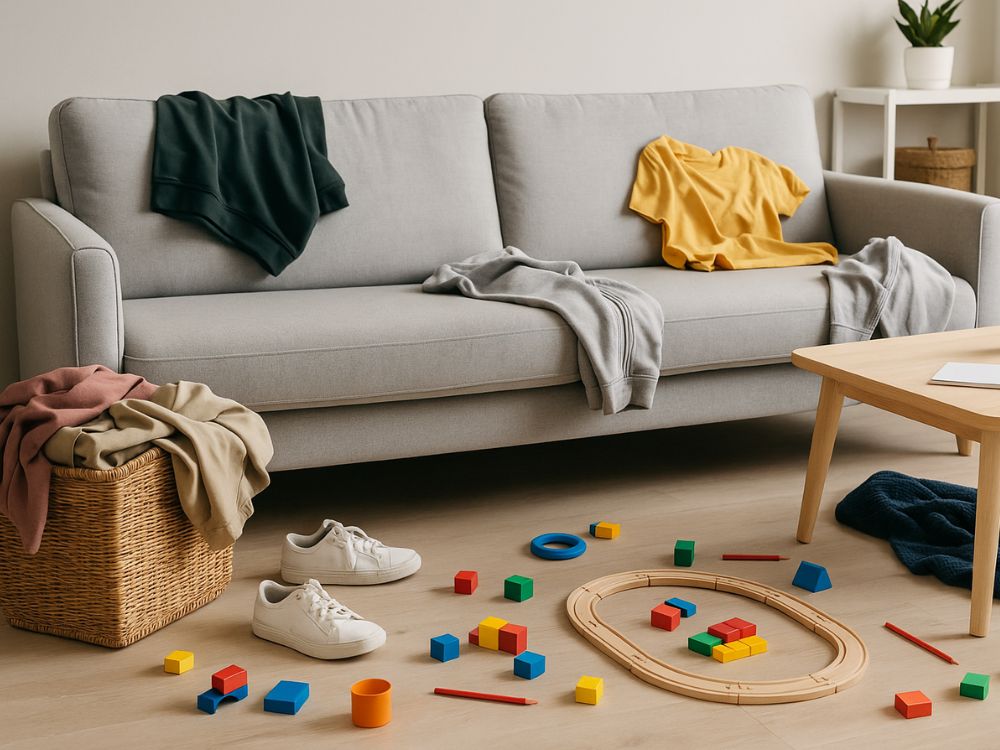
Clutter doesn’t appear all at once. It builds slowly, settling into corners, creeping across countertops, and filling drawers we promise to “deal with later.” At first, it feels harmless. But over time, that extra visual noise starts to weigh on you. Suddenly the house feels crowded, the rooms feel smaller, and everyday tasks—like cooking or getting ready—require extra steps because everything is competing for space.
If you’ve reached the point where your home no longer feels peaceful and you’re not sure where to begin, you’re in the right place. This guide walks you through simple, approachable steps designed to reduce overwhelm, rebuild a sense of control, and help your home feel lighter one small action at a time. No pressure, no rigid rules—just realistic steps that make decluttering manageable, even when motivation feels low.

1. Start With a Clear Win: Tackle the Space You See First
One of the most discouraging feelings is working hard for hours and seeing no visible change. That’s why your most motivating starting point isn’t hidden inside a drawer—it’s in the open.
Clear one surface that you walk past every day:
- Your entryway console
- The kitchen counter
- Your nightstand
- The coffee table
Even removing a handful of items from a single surface can shift the energy of a room. The visual transformation gives you a psychological boost and reinforces that progress is possible, no matter how large the mess feels.
2. Break Your Home Into Micro-Zones
Decluttering an entire home is a massive task—but decluttering a single shelf? A single drawer? The top of a bedside table? That feels possible.
Instead of thinking in terms of rooms, think in terms of micro-zones:
- One laundry basket worth of toys
- One bathroom drawer
- One shelf of mugs
- One section of your closet
- One corner of the living room
The smaller the zone, the more likely you are to finish—finishing builds confidence, and confidence builds momentum.
3. Use Short Timers to Make Decluttering More Approachable
A common reason people avoid decluttering is the belief that it requires an entire day. But meaningful progress often happens in short bursts. Try setting a timer for:
- 10 minutes
- 15 minutes
- or 20 minutes
During that short window, focus only on the task in front of you. No organizing the pantry mid-project, no scrolling on your phone, no wandering into another room. You may be shocked by how much you accomplish in such a small window when distractions disappear.
And if you want to keep going after the timer ends? Great. If not, you’ve still moved forward.
4. Create a Sorting System That Simplifies Every Decision
Clutter isn’t stressful because of the items—it’s stressful because of the decisions attached to those items. Removing guesswork makes the process smoother.
Prepare four containers or bags:
- Keep: Items you use and want to stay
- Donate: Gently used items that could help someone else
- Sell: Only valuable items you are genuinely willing to list
- Trash/Recycle: Things broken, expired, or worn out
Having these categories ready before you start prevents the “I’ll decide later” pile—later never comes, but clutter stays.
5. Ask the Right Questions as You Sort
Some items are easy to release; others hold emotional weight or guilt. When you feel stuck, pause and ask:
- Have I used this in the past year?
- Am I saving it for a version of myself that doesn’t exist anymore?
- Would I buy this again today?
- Does this item support the life I’m living—or add friction to it?
- Am I keeping it out of guilt, obligation, or fear of waste?
Thoughtful questions make decisions clearer and help you distinguish between what’s meaningful and what’s simply taking up space.
6. Make the Experience Feel Calming Instead of Stressful
Your environment shapes your mindset. Decluttering feels lighter when the process itself feels pleasant.
Try:
- Turning on upbeat or soothing music
- Opening the windows to let in fresh air
- Lighting a scented candle
- Wearing comfortable clothes
- Preparing a favorite drink before you start
When your environment feels inviting, the task becomes far less intimidating.
7. Follow a Checklist to Stay Grounded and Focused
A checklist gives your brain structure when everything feels chaotic. It prevents you from bouncing between tasks and helps you complete one area fully before moving on.
You can create a checklist for:
- Rooms
- Categories (clothes, books, cosmetics, paperwork)
- Specific areas (shelves, drawers, surfaces)
Working through a checklist also creates built-in “wins,” which keeps motivation strong, especially on days when energy is low.
8. Visualize the Space You’re Trying to Create
When you’re knee-deep in clutter, it’s easy to focus on what you’re losing: extra decor, old clothing, gifts you never used. But a shift in mindset changes everything.
Instead of focusing on what’s leaving, focus on:
- The breathing room you’re gaining
- The easier mornings
- The calmer evenings
- The clean countertops
- The organized closets
- The sense of relief you’ll feel walking into a tidy room
Sometimes the clearest motivation is imagining that first moment when the space finally feels peaceful again.
9. Remove Decluttered Items Immediately
One of the biggest mistakes people make is leaving donation or trash bags sitting around “for later.” All they do is create new mini piles in new locations.
As soon as you fill a bag, relocate it:
- Donations go directly into your car
- Trash goes straight to the bin
- Recyclables are processed right away
Finishing the cycle gives a sense of closure—and visibly reduces clutter on the spot.
10. Let Go of the Idea of Perfection
Decluttering is not a performance; it’s a process. Your home does not need to look like a perfectly staged Pinterest image to feel organized. Not every drawer will be aesthetic. Not every shelf needs matching containers.
“Good enough” is often the difference between staying stuck and actually making progress.
Aim for functionality, simplicity, and ease. The beauty comes later.
11. Build One Simple Habit That Keeps Clutter Away
Big decluttering sessions create change, but small habits preserve it. Choose one daily habit and commit to it:
- Clear kitchen counters every night
- Sort mail immediately
- Put shoes and bags away as soon as you get home
- Do a five-minute reset before bed
Consistency matters more than the size of the habit.
12. Allow Yourself to Reset Without Judgment
There will be days when clutter creeps back in. That doesn’t mean you’ve failed—it simply means you live a real life. Instead of letting frustration take over, give yourself permission to begin again the next day.
Progress is rarely linear. What matters is that you keep moving forward.
Your Path to a Clutter-Free Home Starts With One Small Step
A clutter-free home doesn’t require an overhaul—it requires small, meaningful choices made consistently. Whether you start with one drawer or one minute, you’re beginning a shift that will make your home feel lighter, calmer, and easier to live in day by day.
Every small effort counts. And once you see your progress—no matter how tiny at first—you’ll feel the momentum build in ways that make decluttering no longer intimidating, but empowering.